Parabens: Are They Actually Bad for Your Hair?
INCI: Methylparaben, Ethylparaben, Propylparaben, Butylparaben · also listed as Methylparaben, Propylparaben, Ethylparaben"Paraben-free" is now printed on bottles that never contained one. The evidence on hair and scalp is far less dramatic than the label suggests.
Safe at permitted levels, and gentler than most replacements
Europe's Scientific Committee on Consumer Safety has assessed parabens repeatedly and continues to find methyl- and ethylparaben safe at authorised concentrations. The EU banned five longer-chain parabens in 2014 and capped two others: regulation working, not evidence the remaining ones are dangerous.
For hair there is very little to say, which is the point: no effect on the shaft, and one of the lowest allergy rates of any preservative class. If your reason for avoiding them is scalp sensitivity, their common replacements have a worse record.
- INCI names
- Methylparaben, ethylparaben, propylparaben, butylparaben (the four still permitted in the EU)
- Banned in the EU
- Isopropyl-, isobutyl-, phenyl-, benzyl- and pentylparaben, prohibited since 2014 for insufficient safety data.
- Job in hair care
- Preservative. They stop bacteria, yeast and mould growing in the water phase of a shampoo, conditioner or mask.
- Found in
- Shampoos, conditioners, masks, styling creams. Far less common on new launches, for marketing rather than regulatory reasons.
- Typical level
- EU limits: 0.4% each for methyl- and ethylparaben (0.8% total for all parabens), and 0.14% for propyl- and butylparaben.
- Regulatory status
- Permitted in the EU, UK and US within those limits. Propyl- and butylparaben additionally banned from nappy-area leave-on products for under-threes.
- Hairmony class
- ActiveScored by the Hairmony engine, so it actually moves which products you get recommended.
- Scored for
- +no hair effect+low allergen riskClose to neutral in scoring: parabens preserve the product and do nothing measurable to hair or scalp at permitted levels.
What they do to hair and scalp
Essentially nothing, in both directions. Parabens do not condition, coat, strip or penetrate the shaft. They sit at a fraction of a percent and, in a shampoo, rinse away within two minutes.
On the scalp, their notable property is how rarely they cause trouble: in patch-test series they sit at the low end of sensitiser rankings, well below fragrance mixes and formaldehyde releasers. For a seborrheic or eczema-prone scalp they are among the safer preservatives available. That is close to the opposite of their reputation.
No reason to avoid if
- You have a sensitive scalp and want a low-allergen preservative
- You have reacted to methylisothiazolinone before
- You buy on performance rather than label claims
Reasonable to avoid if
- You have a confirmed paraben allergy from patch testing
- You are pregnant and prefer to minimise such exposures
- You use many leave-on products daily
In practice: read what replaced them. "Paraben-free" with methylisothiazolinone in a leave-on product is a downgrade, not an upgrade.
Where the controversy came from
A small 2004 UK study reported detecting parabens in breast tumour tissue. It had no control group, did not test healthy tissue for comparison, and its own author stated it did not show parabens cause cancer. It still became the foundation of two decades of marketing.
The underlying question is real: some parabens show weak oestrogenic activity in lab assays. How weak matters: butylparaben, the strongest, is tens of thousands of times less potent than the body's own oestradiol. That assessment is what produced the 2014 bans and the 0.14% cap.
What we based this on
- Current EU position. The Scientific Committee on Consumer Safety has reassessed methyl- and butylparaben and continues to find authorised concentrations safe.
- The replacement problem. When parabens were removed, methylisothiazolinone took their place and caused a European contact-allergy epidemic severe enough that it was banned from leave-on products. Current limits in CosIng.
Not medical advice. This page describes how an ingredient behaves on hair and scalp. If you have a persistent rash, sores, sudden shedding or a diagnosed scalp condition, see a dermatologist before changing anything.
Frequently asked
Do parabens cause hair loss?
No. There is no evidence connecting parabens to hair loss. They are present at a fraction of a percent, have no effect on the follicle, and in a shampoo are rinsed off within two minutes.
Why are some parabens banned in the EU but not others?
Five longer-chain parabens were prohibited in 2014 because manufacturers did not supply enough safety data to assess them, not because harm was demonstrated. The four that remain were assessed and found safe within specific limits.
Is paraben-free better for a sensitive scalp?
Usually not. Parabens have one of the lowest contact-allergy rates among preservatives, and several replacements have worse records. Methylisothiazolinone in particular was banned from leave-on products in Europe. What replaced them matters more than their absence.
Check another ingredient
Keep reading
The Hairmony Team
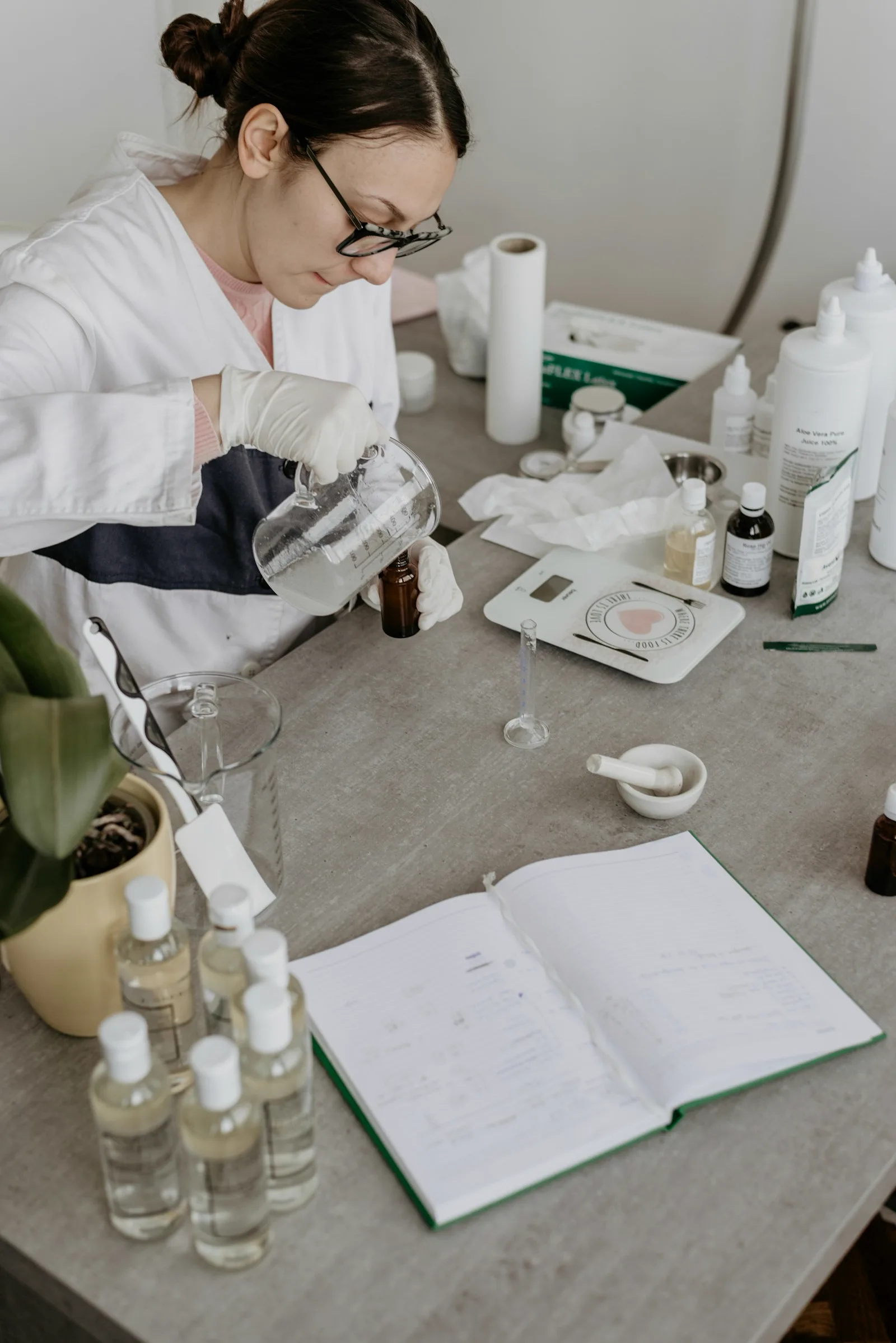
We're the team behind Hairmony, the app that reads your hair from a photo and builds a routine around it. Our ingredient engine scores more than 14,000 INCI names, and this glossary is where we explain what those scores are based on.
Worried about what is in your bottle?
Hairmony scores every ingredient against your own hair and scalp profile, so you see what matters for you.
Try Hairmony free for 3 days →