Straight Hair (Type 1A, 1B & 1C): How to Nourish and Handle It
Type 1 hair falls straight from root to tip - glossy, smooth, and easy to grow. Its catch is oil and flatness. Here's what sets 1A, 1B and 1C apart, the real pros and cons, and how to care for each.
Key takeaways
- Type 1 hair is straight - no curl or wave - and splits into 1A (finest), 1B (medium), and 1C (coarsest).
- Pros: naturally shiny, soft, frizz-resistant, easy to detangle, and quick to grow long.
- Cons: goes oily and flat fast, struggles to hold curls, and the fine subtypes damage easily.
- The golden rule: keep conditioner and oils off the roots, wash gently (not constantly), and build volume with lightweight products.
Straight hair can feel like the easy hair type - until your roots are greasy by lunch and your curls fall out before you leave the house. If you're not sure this is your type yet, start by finding your hair type or try our quick hair type finder.
What is type 1 (straight) hair?
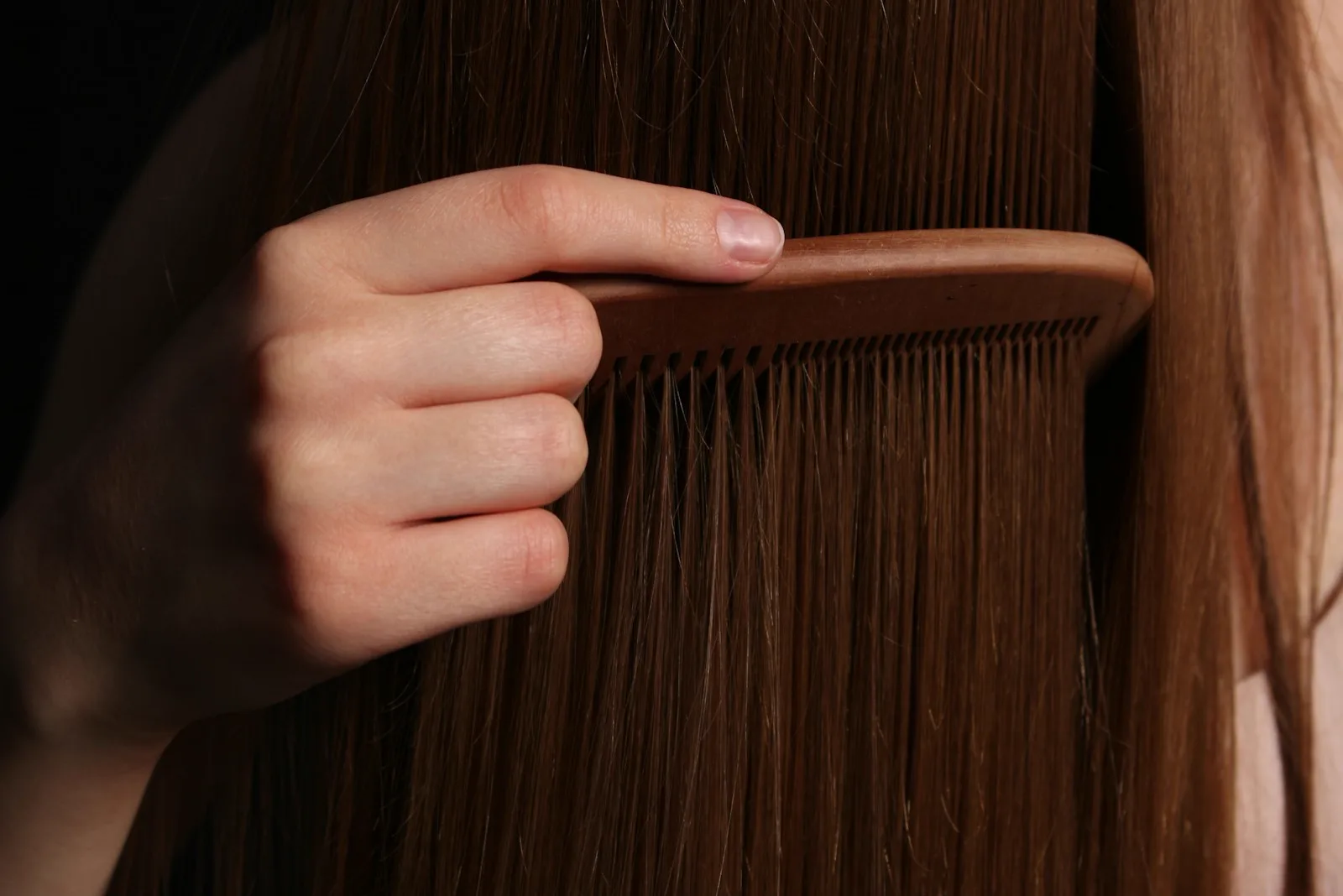
In the widely used Andre Walker system, type 1 is straight hair - it grows with no natural curl or wave. The shape is set by your follicle: a round, symmetrical follicle pushes out a straight strand. (It's mostly written into your genetics.)
That straightness is exactly why type 1 hair is so shiny - and so oil-prone. With no bends to interrupt it, scalp oil (sebum) slides straight down the shaft, polishing the hair but also reaching the lengths fast. The same smooth surface reflects light beautifully but offers nothing to grip a curl.
Straight hair is a superhighway for oil: nothing slows the sebum down, so it reaches the ends - and shows - faster than on any other hair type.
1A, 1B and 1C: the differences
All three are straight; they differ mainly in strand thickness and how much body the hair has.
Type 1A
The finest, thinnest straight hair - pin-straight, soft, and very glossy, with no body at all. It's the rarest type, most common in people of East Asian descent. It looks flat quickly, shows oil first, and is the hardest to hold any style.
Type 1B
Medium-thickness strands with more body than 1A and often a subtle bend near the ends. This is the most common straight texture - straight overall, but with enough volume to hold a style reasonably well.
Type 1C
The thickest, coarsest straight hair, sometimes with a slight wave and the most natural volume. It holds a blowout or curl best of the three, but can feel coarse or look a touch frizzy in dry weather.
| Subtype | Strand thickness | Body & volume | Oil & flatness | Holds a curl? |
|---|---|---|---|---|
| 1A | Very fine, thin | None - pin-straight | Oils & flattens fastest | Hardest to hold |
| 1B | Medium | Some body, slight bend | Moderate | Holds reasonably |
| 1C | Coarse, thick | Most volume, slight wave | Slowest to show oil | Holds best |
The pros and cons of straight hair
Every hair type is a trade-off.
The pros
- Naturally shiny. A smooth, flat cuticle reflects light, so straight hair looks glossy with little effort.
- Soft and frizz-resistant. It stays sleek in humidity far better than wavy or curly hair.
- Easy to detangle and manage. Strands don't knot or coil, so brushing and styling are quick.
- Grows long with ease. Sebum travels the whole shaft, keeping ends conditioned and less prone to breakage and split ends.
- Low-effort drying. It air-dries smooth, making true wash-and-go styling realistic.
The cons
- Gets oily fast. That same oil-friendly shaft means roots look greasy quickly and need more frequent washing.
- Flat and limp. With little natural volume - especially 1A - hair can look lifeless, and heavy products make it worse.
- Won't hold a curl. Smooth strands drop curls and updos without serious prep.
- Shows everything. Oil, product buildup, and damage are all more visible on a sleek surface.
- Fine strands are fragile. 1A and finer 1B hair break more easily and thin more visibly.
How to nourish and handle it
Straight hair thrives on a light touch. The goal is a clean, healthy scalp and conditioned ends - without anything heavy weighing the hair down.
Wash smart, not constantly
- Wash about 2-3 times a week with a gentle or volumizing shampoo; fine 1A may need it a little more often.
- Focus shampoo on the scalp, where the oil is - not the ends.
- Clarify occasionally (every week or two) to remove buildup that dulls and flattens straight hair.
- Don't over-wash. Stripping the scalp can trigger more oil in return.
Condition the ends only
- Apply a lightweight conditioner from mid-lengths to ends, and keep it off the roots.
- Skip rich butters and heavy creams - they flatten fine hair fast. Lightweight, fast-absorbing formulas win.
- If you use oil, choose a light one, a tiny amount, on the ends only, every few washes.
Build volume
- Use a mousse or root-lift spray on damp hair, then blow-dry for body.
- Blow-dry upside down or with a round brush to lift the roots.
- Dry shampoo between washes absorbs oil and adds grip and texture.
Protect and handle gently
- Always use a heat protectant before hot tools - fine strands scorch easily.
- Don't over-brush or scrub with a towel; pat dry and detangle gently to avoid breakage.
- A boar-bristle brush distributes scalp oil down the lengths, which conditions ends naturally.
Tip: Flat, greasy roots by midday are usually a placement problem, not a product problem. Keep conditioner, masks, and oils below the ears, and let your scalp breathe.
Common mistakes to avoid
- Washing every day with a harsh shampoo. It strips the scalp and can rebound into even oilier roots.
- Putting conditioner or oil on the roots. The single fastest way to flatten straight hair.
- Reaching for heavy creams and butters. Great for coily hair, smothering for type 1.
- Skipping heat protectant. Fine straight strands are some of the easiest to heat-damage.
- Letting silicones build up. They coat the hair, dull the shine, and weigh it down over time - clarify to reset.
Most straight-hair frustration comes from treating it like thicker, thirstier hair. Lighten up, target the scalp and ends separately, and type 1 hair rewards you with shine most people pay for. If you want a routine matched to your exact subtype and porosity, Hairmony reads your hair from a photo and builds one for you.
Frequently asked questions
Is 1A, 1B, or 1C hair better?
None is better - they just differ in strand thickness and body. 1A is the finest and flattest, 1C is the thickest with the most volume, and 1B sits in between. The right care depends on which subtype you have, not on a ranking.
Why does my straight hair get oily so fast?
On straight hair there's no curl or wave to slow sebum down, so scalp oil slides straight down the shaft and coats the lengths quickly. Washing too aggressively can backfire by stripping the scalp and triggering more oil, so wash gently and keep conditioner and oils off the roots.
How often should I wash straight hair?
Most people with straight hair do well washing every two to three days. Fine 1A hair may need it more often, while coarser 1C can wait longer. Use a gentle shampoo, clarify occasionally to clear buildup, and avoid over-washing - it strips the scalp and can make oiliness worse.
Can straight hair hold a curl?
Yes, but it needs help. Curl clean, completely dry hair, add a light mousse or texture spray, use a curling iron, then let each curl cool fully before touching it and set with hairspray. 1A hair drops curls fastest; 1C holds them best.
Keep reading
The Hairmony Team
We're the team behind Hairmony - the app that reads your hair and scalp from a photo and builds a routine around it. We write these guides to make the science of hair care simple and actually usable.
Not sure if you're 1A, 1B or 1C?
Hairmony reads your hair type, thickness and oil level from a photo - then builds a straight-hair routine that fits your exact strands, not a guess.
Try Hairmony free for 3 days →