Co-Washing: Should You Really Wash Hair With Only Conditioner?
Co-washing - cleansing with conditioner instead of shampoo - can turn dry, straw-like hair soft and hydrated. It can also leave the wrong hair type greasy, flat and itchy. Here's how it works, how to do it properly, and the honest answer on whether it's right for you.

Key takeaways
- Co-washing = cleansing with conditioner only, no shampoo. Also called "no-poo."
- It hydrates by not stripping. You keep your natural oils, which means softer hair and less frizz.
- The catch is buildup. Conditioner isn't made to be left on the scalp, so you still need a gentle shampoo every 7-10 days.
- Great for dry, thick, curly and coily hair; usually wrong for fine, oily or flake-prone scalps.
Somewhere along the way, "wash your hair" became "shampoo your hair." For a lot of dry and textured hair, those aren't the same thing. Co-washing is the pushback - clean your hair with the gentle stuff and leave the harsh detergents on the shelf.
What is co-washing?
Co-washing - short for "conditioner washing" - means cleansing your hair and scalp with conditioner instead of shampoo. You can use a dedicated cleansing conditioner (also sold as a "co-wash"), which contains mild cleansing agents, or a lightweight, silicone-free regular conditioner. It's also known as conditioner-only washing or the "no-poo" method.
Shampoo cleans using surfactants that bind to oil and rinse it away - but they don't stop at excess oil; they take the natural oils your hair needs too. Conditioner still lets you physically massage away sweat, dust and loose dirt, but without that harsh degreasing. For chronically dry hair, that trade is often worth it.
Somewhere we decided "washing" means "stripping." Co-washing separates the two: you can clean hair without degreasing the life out of it.
How to co-wash, step by step
- Fully saturate your hair with warm water - more than you think; co-washing relies on water for much of the cleaning.
- Apply a generous amount of cleansing conditioner, focusing on the scalp first.
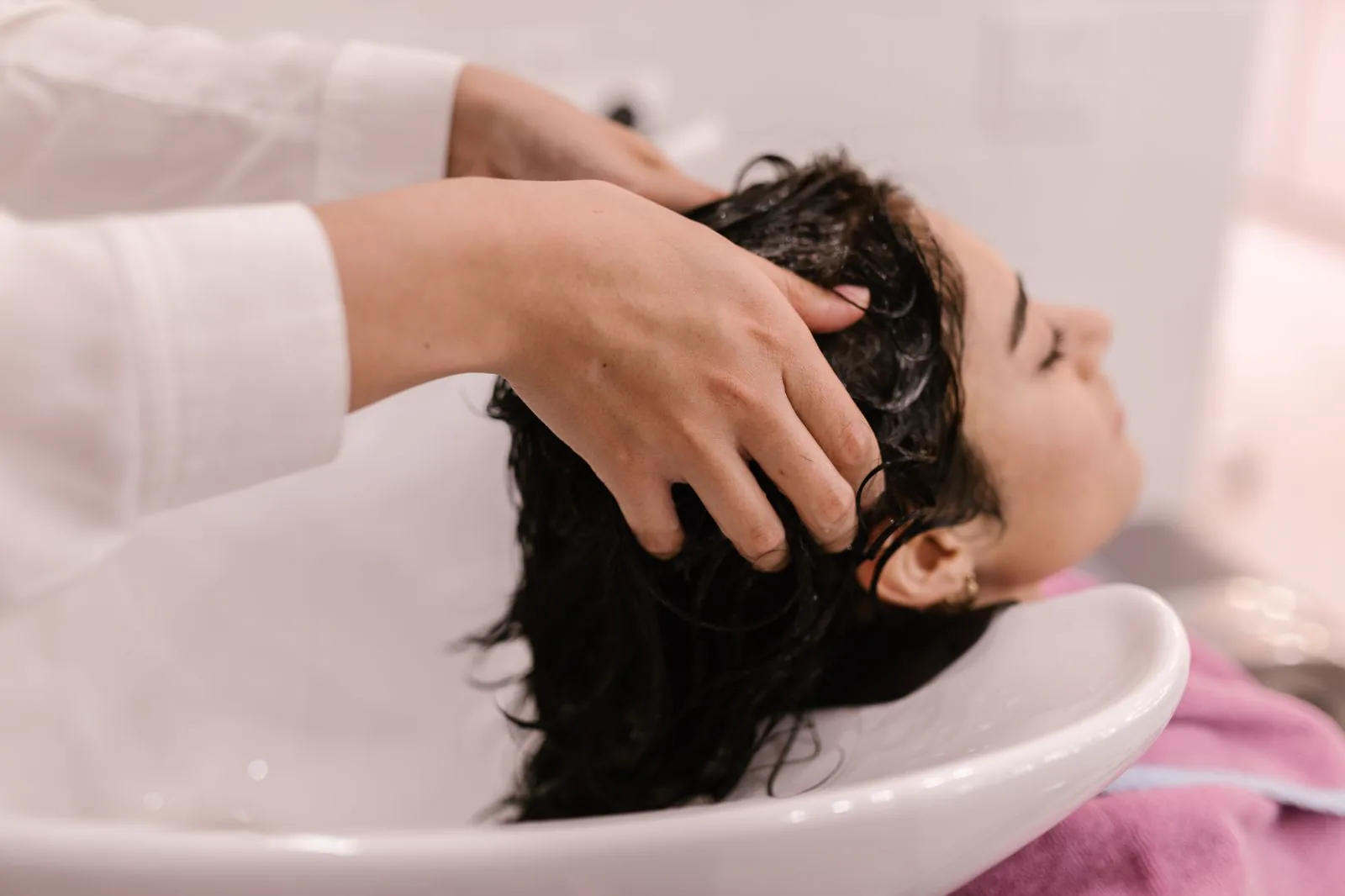
- Massage the scalp firmly with your fingertips (or a scalp brush) for a minute or two - this is the actual "cleaning." Work it down the lengths as you go.
- Let it sit for a couple of minutes so it can soften and detangle, then rinse thoroughly. Under-rinsing is the fast track to greasy roots.
- Optional: follow with a small amount of regular conditioner on the ends only if your lengths need extra slip.
Tip: The scalp massage is doing the job shampoo's chemistry usually does. If you co-wash by just smoothing conditioner over your hair and rinsing, it won't feel clean - get your fingertips on the scalp and actually work it.
The benefits
- More moisture, less frizz. Keeping your natural oils means softer, more hydrated hair - and hydrated hair frizzes less.
- Better curl definition. Curls and coils that aren't stripped clump and spring back more readily.
- Gentler on color. Fewer harsh washes means color-treated hair holds its tone and shine longer.
- Less breakage from washing. The slip makes detangling easier, so you snap fewer strands on wash day.
- A gentler wash-day rhythm for textures that can't handle frequent shampooing but still get sweaty or dusty between washes.
The catch: buildup and your scalp
Conditioner is designed to be rinsed off, not repeatedly worked into your scalp. Use it as your only cleanser and, over time, residue can accumulate - on the hair as limpness and dullness, and on the scalp as itchiness or irritation. And if any of your products contain non-water-soluble silicones, conditioner simply can't remove them, so they layer up until only a real shampoo can cut through.
That's why the honest version of co-washing is not "never shampoo again." It's "shampoo far less." Most dermatologists and stylists suggest clearing buildup with a gentle, sulfate-free shampoo every 7 to 10 days, even if you co-wash in between. If your scalp gets flaky, oily or itchy, that's your signal to clarify - or that co-washing isn't your method. A CWC wash is a good halfway house: you keep a real shampoo on the scalp but still baby your lengths.
Who should co-wash - and who shouldn't
| Co-washing tends to work for | Co-washing tends to backfire for |
|---|---|
| Dry, thick or coarse hair | Fine or thin hair (goes limp) |
| Curly & coily (type 3-4) hair | Straight hair that oils up fast |
| Color-treated, chronically thirsty hair | Oily scalps |
| People who over-wash and strip their hair | Dandruff / seborrheic dermatitis |
If your hair is dry, thick, curly or coily, or you've been over-washing and stripping it, co-washing can be a genuine upgrade - it's one of the pillars of the Curly Girl Method. If your hair is fine, thin, straight or oily, or your scalp is flake-prone, it usually just leaves things heavier and greasier - and the oils conditioner leaves behind can even feed a flaky scalp. Those heads do better with a light shampoo, or the volume-friendly reverse wash.
The deciding factors are your hair type and how oily your scalp runs - the two things Hairmony reads before recommending a wash routine.
Mistakes to avoid
- Never clarifying. The number-one co-washing mistake - buildup is inevitable without an occasional real shampoo.
- Co-washing with a silicone-heavy conditioner. Conditioner can't rinse it out - go silicone-free.
- Skipping the scalp massage. Without it, you're conditioning, not cleaning.
- Under-rinsing. Leftover conditioner is what makes roots greasy.
- Forcing it on the wrong hair type. If your roots are greasy by day two, co-washing isn't failing - it's telling you it's not for you.
Co-washing is transformative for the right hair and frustrating for the wrong hair - there's not much middle ground. If you're dry, thick and textured, cleansing with conditioner (and clarifying now and then) can give you the softest, most defined hair you've had in years. If you're fine or oily, trust the greasy roots and move on. Not sure which you are? Hairmony reads your hair type, texture and scalp oiliness from a photo and tells you whether to co-wash, shampoo, or split the difference.
Frequently asked questions
What is co-washing?
Co-washing is washing your hair with conditioner - and only conditioner - instead of shampoo. It's also called conditioner-only washing or "no-poo" (no shampoo). You massage a cleansing conditioner or a regular silicone-free conditioner into the scalp and lengths, then rinse. The idea is to lift away dirt and sweat without the harsh detergents in shampoo that strip natural oils from dry, textured hair.
How often should you co-wash?
As often as you'd normally wash. Curly and coily hair often co-washes 2 to 3 times a week; drier hair may do it once. Crucially, most people should still shampoo with a gentle sulfate-free cleanser every 7 to 10 days to clear buildup - co-washing alone doesn't fully clean the scalp over time.
Does co-washing cause buildup?
It can. Conditioners are designed to be rinsed off, not left in continuous contact with the scalp, so washing with them repeatedly can leave residue that builds up - especially if your products or your co-wash contain non-water-soluble silicones, which conditioner can't remove. Buildup shows up as limp, greasy or itchy hair. A gentle clarifying shampoo every week or so prevents it.
Who should not co-wash?
Fine, thin or oily hair usually shouldn't co-wash exclusively - it tends to come out heavy, flat or greasier. People with an oily scalp, dandruff or seborrheic dermatitis should also be cautious, because leaving conditioner on the scalp can feed the problem; they do better alternating co-washing with a proper shampoo, or skipping it. Co-washing suits dry, thick, curly and coily hair best.
Can you co-wash with regular conditioner?
Yes, as long as it's silicone-free, so it doesn't leave a coating you can't rinse out. Purpose-made "cleansing conditioners" or "co-washes" contain mild cleansing agents that lift dirt a little better than a plain conditioner, but a lightweight, water-soluble regular conditioner works for many people. Whatever you use, still clarify with shampoo periodically.
Keep reading


The Hairmony Team
We're the team behind Hairmony - the app that reads your hair and scalp from a photo and builds a routine around it. We write these guides to make the science of hair care simple and actually usable.

Should you co-wash or shampoo?
It comes down to your hair type and how oily your scalp runs. Hairmony reads both from a photo and tells you exactly how - and how often - to wash.
Try Hairmony free for 3 days →